Sound Healing Is a Coming Home: Reflections From the Pure Heart Podcast
14 September 2026
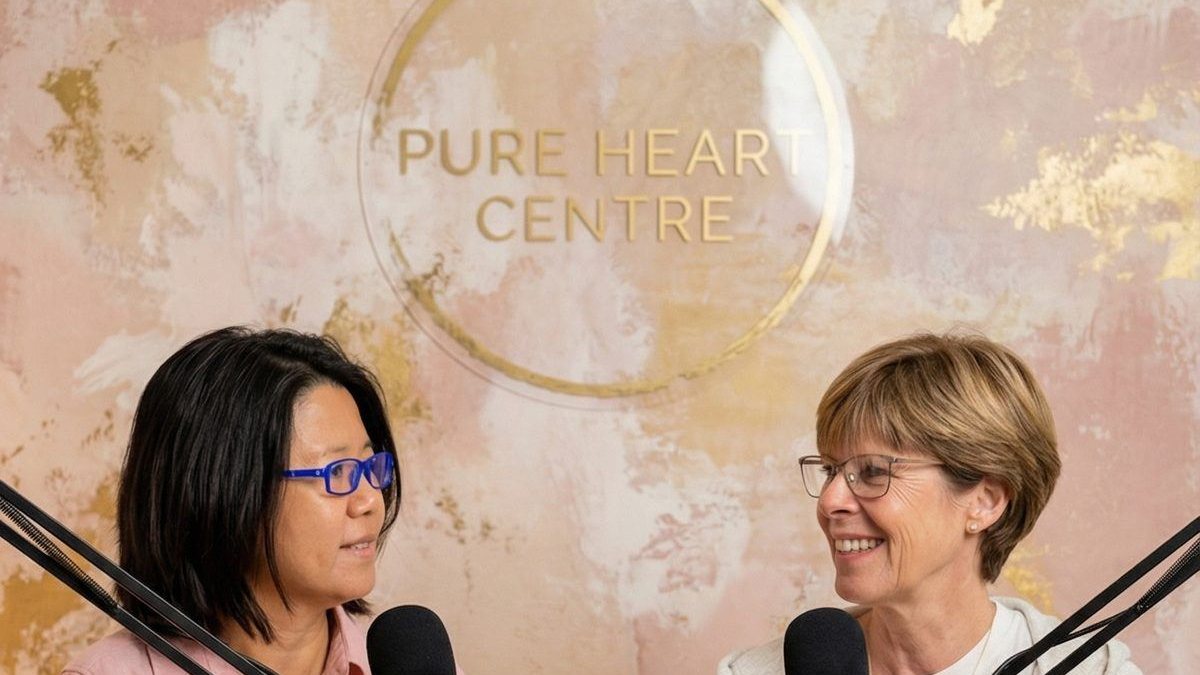
I recently sat down with the Pure Heart Podcast to talk about sound healing, and one idea kept surfacing in the conversation: that sound healing rarely stays a novelty for long. It tends to shift, for the people who keep coming back, into something closer to a homecoming.
You can hear the full conversation here: Sound Healing Is a Coming Home to Yourself. What follows are some of my own reflections on the theme, not a transcript of what was said.
Not Somewhere New, Somewhere Familiar
People arrive at sound healing through all kinds of doors. Curiosity. A stretch of stress that won't lift. A friend's recommendation, or a retreat that happened to include a bowl. Whatever the door, I've noticed the same thing tends to happen once someone keeps returning: it stops feeling like they're trying something, and starts feeling like they're coming back to something.
I don't think that's really about the instruments. I think it's closer to the idea that the nervous system already knows how to rest, it isn't something that has to be taught from nothing. Most of us have simply spent years layering things on top of that capacity: pace, performance, vigilance, until the body seems to forget it was ever there. A session doesn't install something new so much as it offers the conditions for that older memory to surface again, for a while.
Relaxation Versus Regulation
One distinction I find useful, and one I keep coming back to with people in sessions, is the difference between relaxation and regulation. Relaxation is a state, something you can feel within a single session. Regulation is closer to a capacity, the ability to return to settled more easily and more often, out in ordinary life, not just on the mat. I hold this as a framework from my own practice and reading, not a settled clinical claim, and I'd encourage anyone curious to look into the research themselves. What I can speak to is what I've noticed: relaxation tends to arrive in one sitting. Anything closer to regulation tends to build with regular practice, fortnightly or monthly, rather than a single visit.
Why Some People Cry, and Don't Know Why
It's common in a session for someone to feel a wave of emotion they can't immediately explain, grief, relief, tenderness, without an obvious trigger in the room. I don't read this as random. My own sense, built from years of sitting with people through it, is that a body given enough safety will sometimes finish something it once had to interrupt. I can't promise that experience for anyone specific, every nervous system responds differently, but when it happens, I don't think it needs explaining away. It's usually just the body doing something quietly intelligent with an opening it's finally been given.
If any of this resonates, Keepers of Frequency runs fortnightly on the Gold Coast, or a private session works with your own nervous system directly rather than a group field. If you're not sure which fits, a free 15-minute conversation is a low-pressure way to figure that out together. For the fuller picture of the ideas underneath this, see what is neuro-acoustic science.