Tuning Fork Starter Set: Which Forks to Begin With
19 September 2026
Once someone's felt what a tuning fork can do in a session, the next question is almost always the same: which ones should I actually buy for home? With eight notes in a full octave set, weighted and unweighted options, and no obvious starting point, it's easy to get stuck before you begin.
Three Forks, Two Ways of Working
A sensible starter set covers both main ways a fork gets used, rather than trying to cover every note at once.
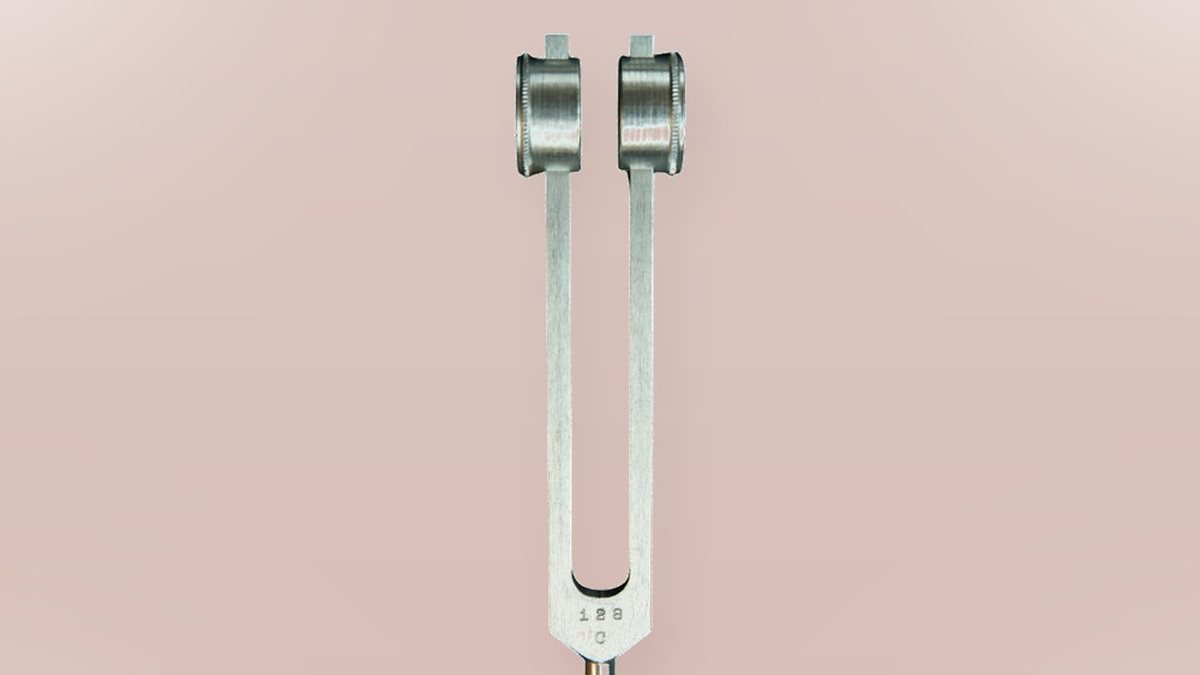
128 Hz, weighted. For body contact work. Strike it and rest it on your sternum, or run it gently down either side of your spine, the same territory the Spinal Walk works in during a session. You feel the vibration as much as you hear it.
C, 256 Hz, and G, 384 Hz, both unweighted. Held near, not in, the ear rather than against the body. C and G sit a perfect fifth apart, a classic pairing in harmonic sound work, so the two together give you something to actually listen to, not just one note in isolation.
A Simple Way In
No training is required to start. For the weighted fork, strike it on your palm or a soft striker, then rest it on your sternum or move it slowly along either side of your spine, noticing the vibration rather than rushing to the next spot. For the unweighted pair, strike and hold each one near the ear, letting the tone ring out fully before striking again, one, then the other, then both in sequence.
There's also toning: strike a fork, match its pitch with your own voice, and hold the note as long as feels comfortable. This is the same territory a Voice Mapping Consultation goes into in far more depth, mapping which of your own tones actually need the work.
A few minutes, a few times a week, tends to be enough to start noticing what you notice. Think of it the way you'd think of any other daily hygiene, a few minutes most days, rather than a special occasion.
Why a Fork First, Rather Than a Singing Bowl?
Both have a place in a home practice, and plenty of people end up with both eventually. But a fork is usually the easier starting point. A singing bowl asks you to learn a striking and rimming technique before it sounds the way you want it to, and a poor first attempt can be discouraging. A tuning fork does one thing and does it well: strike it, and it rings a single, clean, unwavering note, every time, with nothing to get wrong. That reliability is part of why forks are where I usually point people who are brand new to a home practice, saving the bowl for once the daily habit is already there.
Starter Set or Full Octave Set?
The starter set (128 Hz weighted, plus C and G unweighted) is the place to begin if you're new to home practice. The full octave set is all eight unweighted forks completing a C to C scale, worth it once you already know you want to go further than the initial three. If you've already done a Voice Mapping Consultation, you don't need to guess at all, I can point you to the specific notes that came up for you rather than the full range.
Not a Medical Device
These are tools for a sound and toning practice, not medical devices. They don't diagnose, treat or cure any condition, and using one isn't a substitute for medical or mental health care. What they are is a low-pressure way to keep a practice going between sessions, or to explore this work for the first time on your own terms.
If you'd like to see the full starter set, the octave set, or individual forks, the starter set page has full details and pricing. Curious what a session with these instruments actually feels like first? Tuning fork therapy: what to expect or private sound healing: what to expect are both good places to start.