What Your Voice Frequency Reveals About Your Nervous System
21 September 2026
Most of us were taught that the voice is for communication. What you say. How you say it. Whether you sound confident or nervous, warm or guarded.
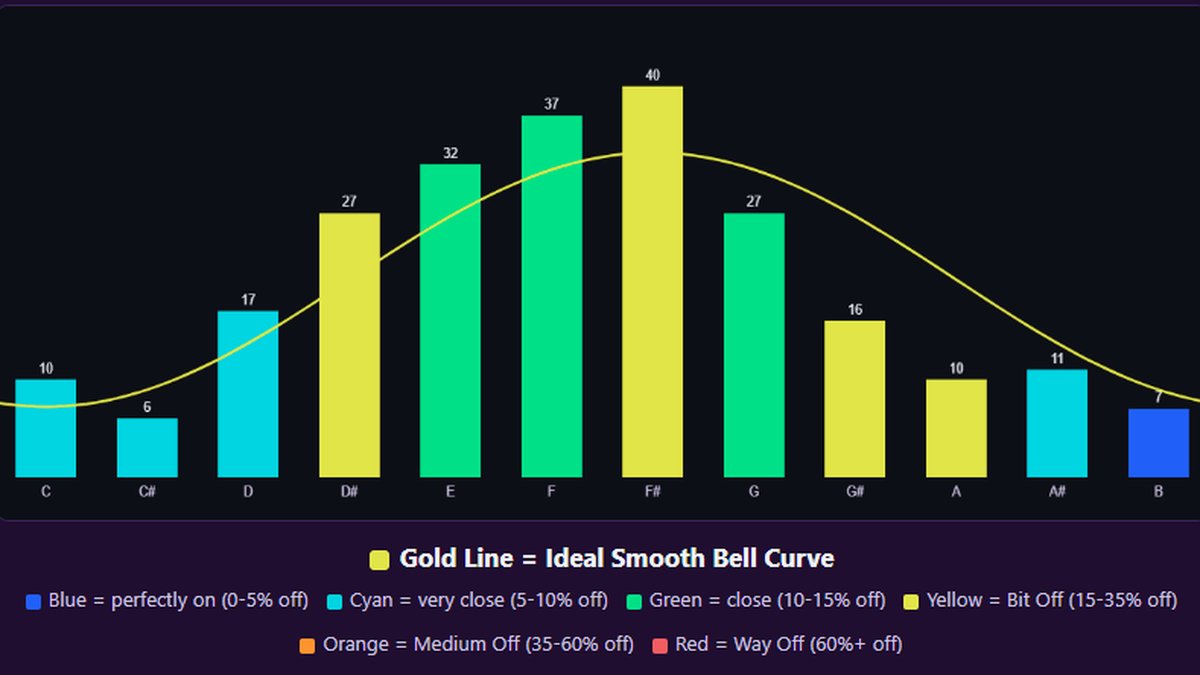
What we weren't taught is that beneath all of that, beneath the words, the tone, the delivery, your voice is producing a frequency landscape too. That's not a new idea. It's a researched one that simply hasn't made it into mainstream conversation yet.
What Is BioAcoustic Biology?
Sharry Edwards, M.Ed., is widely credited as a pioneer in Vocal Profiling using BioAcoustic Biology. Over more than 30 years and the analysis of hundreds of thousands of voice prints, Edwards has documented a way of thinking about the voice that goes well beyond communication: that the frequencies present in a voice can be read as a picture of the body's own structural and biochemical state.
In Edwards' framework, every muscle, compound and process in the body has what she calls a Frequency Equivalent, a value that can be identified and measured. When those frequencies sit in balance, the body functions well. When they become discordant, when certain frequencies are missing, distorted or dominant, Edwards describes the result simply as dis-ease.
I hold this as a framework from her research and my own training, not as settled medical science, and I'd encourage anyone curious to look into her work directly rather than take any one practitioner's word for it, mine included.
The Frequencies You're Not Producing
One of the more striking parts of this field is what Edwards' research says about what's absent from a voice, not just what's present.
In her work, the frequencies that don't appear in a voice print, the missing notes, are read as pointing to what the body is holding onto. Edwards found that people sharing similar stresses or patterns tended to produce similar, sometimes near-identical, vocal anomalies, as though the body has a common language for what it's carrying, whether or not the person is consciously aware of it.
It's part of why someone can do years of therapy, journalling and inner work and still feel like something hasn't fully shifted. The mind processes what it can access. The body, in this framework, holds what it can't.
A Finding That Changes How We Understand Relationships
Perhaps the finding that stops people most is what Edwards documented when she analysed couples' voice prints side by side.
She found that partners often appeared to instinctively compensate for each other's missing frequencies, the notes absent from one person's voice present in the other's, as though the nervous system, in relationship, is already reaching to complete itself through someone else's sound.
David Gibson, author of The Complete Guide to Sound Healing, has documented related patterns in his own decades of research into how frequency moves through the body and nervous system. Different researchers, working separately, arriving at a similar throughline: frequency says something about us that words don't always reach.
What a Voice Mapping Session Actually Is
Voice Mapping is my own one to one application of this thinking. It isn't Edwards' or Gibson's specific method, but it's built from the same underlying idea, that the voice carries information the conscious mind doesn't fully control.
You don't need to prepare anything or know anything about sound or frequency beforehand. You speak naturally for a few minutes, over Zoom, and that becomes the basis for what we look at together.
What gets mapped isn't what you said. It's the frequency landscape of how you sounded: which tones came through strong, which were quiet, and which barely showed up at all.
What comes back isn't a diagnosis. It's a reflection, a picture of where your nervous system seems to be sitting right now, and which traditionally-associated sounds, colours, oils and flower essences might support the tones that were quiet. Afterwards, I email you a written report covering all of it.
We go through what's showing together, and talk about what resonates for you personally. It's a different kind of read than most people have had, and for some, it names something they've sensed for a long time without having language for it.
Who This Is For
Voice Mapping tends to resonate most with people who are already self-aware and already doing the work, but who sense there's a layer they haven't fully accessed yet.
If you've been in therapy, if you track your own patterns, if you take your inner life seriously and still feel something hasn't clicked, this is built for that gap.
It's also simply for anyone curious about what their own voice is carrying. You don't need to be in crisis. You just need to be open to hearing something.
Book a Session
Voice Mapping Consultations are available worldwide over Zoom, 30 minutes, $120, with a written report emailed within 24 hours.
Book your Voice Mapping Consultation here.
BioAcoustic Biology and Voice Mapping are not intended to diagnose, prescribe for, treat or cure any medical condition. This reflects Edwards' and Gibson's published research alongside my own training and practice, not settled medical science. It offers a frequency-based reflection, a starting point for conversation and self-understanding, not a replacement for medical or mental health care.